



The advertising landscape for food and drink brands is about to change forever. From 5 January 2026, the UK’s most restrictive advertising regulations in a generation will reshape how brands can reach consumers—creating both challenges and unprecedented opportunities for those who act strategically.
While voluntary compliance is encouraged from 1 October 2025, the legal enforcement begins in January 2026. Forward-thinking companies are already identifying the untapped potential in compliant advertising formats whilst many brands are still panicking about losing their primary marketing channels.
Before exploring what changes in 2026, it’s crucial to understand that significant HFSS advertising restrictions already exist today. Current ASA rules (which pre-date the 2026 ban) already state that HFSS product ads must not be directed at under-16s or placed in media where more than 25% of the audience is under 16.
Current ASA rules effectively restrict HFSS advertising near schools, even if the estimated footfall of under-16s is below 25%. The standard approach, based on a series of ASA adjudications, is that HFSS ads should not be placed within 100 metres of a primary or secondary school.
Key enforcement points:
As one industry expert notes: “The ASA will apply a 100m placement rule around schools strictly – even when there is data to suggest that the actual audience may well have been below 25% under-16s.”
This means that, in practice, advertising HFSS products near schools is already not permitted under current ASA rules—regardless of actual audience data.
Health Minister Andrew Gwynne confirmed the ban as a means of tackling childhood obesity, with restrictions applying only to advertisements for “less healthy food and drink”. Here’s what becomes completely off-limits for HFSS product advertising:
In 2022, Parliament passed the Health and Care Act, which included new restrictions that prohibit paid-for online ads for “less healthy” food and drink products. This includes:
The regulations prevent ads for “identifiable” HFSS products on Ofcom-regulated TV services and on-demand programme services between 5:30am and 9:00pm, and those in paid-for space in online media at any time.
The ban will apply to products, not companies. Brand advertising will still be permitted, as long as no recognisable HFSS products feature. Legal clarification of “brand advertising” is to be determined before the advertising restrictions come into force on 5 January 2026, subject to Parliamentary approval.
Implementation guidance issued by the frontline regulator, the Advertising Standards Authority (ASA), will provide further information on how this will work in practice. The ASA already enforces existing HFSS rules with powers including:
The ASA considers proximity to schools as a strong contextual indicator that an ad is “directed at under-16s,” regardless of actual audience composition data. If an HFSS ad is placed near a school (within 100 metres), it is likely to be considered a breach of the rules, regardless of the estimated footfall composition.
Several high-performing advertising formats remain entirely unaffected by the new restrictions:
Ads in audio-only content/media or audio-led platforms, such as podcasts (if they are audio-only), or music-only streaming services remain completely exempt. This includes:
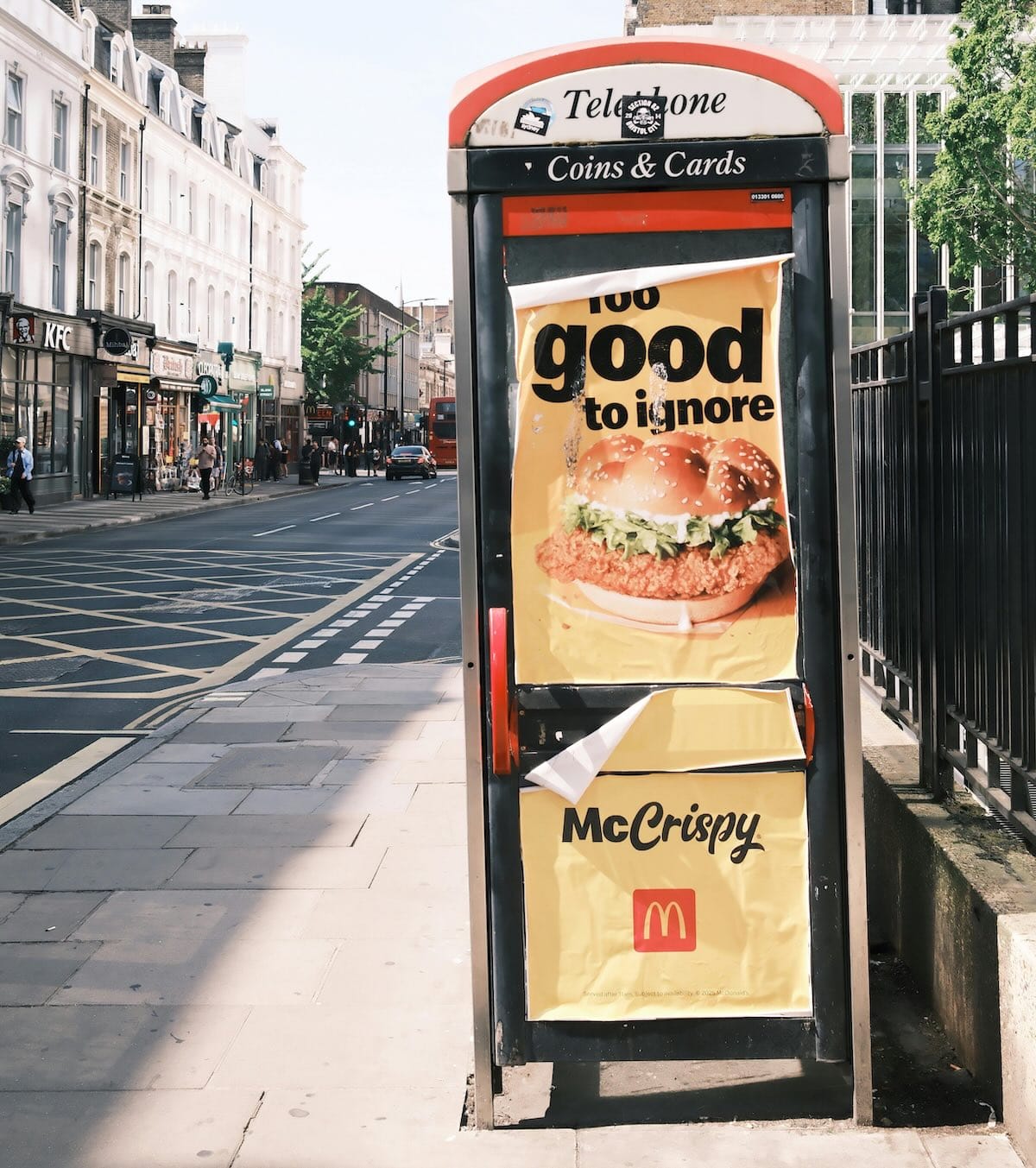
Digital out-of-home advertising remains completely unrestricted for HFSS products, encompassing:
However, outdoor advertising companies must ensure compliance with the existing 100-meter school proximity rule when planning DOOH campaigns.
Contextual advertising on editorial websites remains permitted when content focuses on brand values rather than specific products and placements avoid sites with high under-16 audiences.
Brand advertising will still be permitted, as long as no recognisable HFSS products feature. So ‘safe’ brand copy can still run pre-9pm on TV (and all day online), in tandem with HFSS copy post-watershed.
The current timeline creates three critical phases:
All advertisers are asked to comply with the voluntary ban from 1 October as a show of good faith and in preparation for the legal enforcement date on 5 January 2026. Early adopters gain:
Full regulatory enforcement begins, with non-compliant brands facing penalties whilst prepared brands maintain visibility.
As non-compliant inventory floods exempt channels, costs increase. Brands that secured strategic partnerships and inventory early maintain cost advantages.
Since 2007, WLW has navigated brands through major regulatory shifts, platform policy changes, and market disruptions. Our HFSS transition methodology transforms restriction into opportunity:
“Thanks to WLW Future, our projects have not only met but exceeded expectations. We couldn’t be happier with the results.”
— Dr Bahman Nedjat-Shokouhi, CEO, Medefer
The HFSS ad ban represents the most significant marketing challenge—and opportunity—facing food and drink brands in decades. Whilst competitors scramble to react, strategic brands are already positioning themselves for long-term advantage.
The 2026 HFSS ad ban isn’t just a regulatory hurdle—it’s a market reset that rewards strategic thinking over reactive scrambling. However, brands must remember that significant HFSS restrictions already exist today, particularly around school proximity. Understanding and complying with current rules is essential preparation for the expanded restrictions coming in 2026.
Brands that understand the rules, embrace the opportunities, and execute with precision will emerge stronger, more visible, and more profitable than before.
The question isn’t whether you can survive the HFSS ad ban. It’s whether you’ll use it to build unassailable competitive advantage whilst your competitors lose visibility and market share.
WLW has the expertise, experience, and strategic vision to guide your brand through this transition—not just safely, but profitably. Let’s discuss how we can help you stay visible, compliant, and growing whilst your competitors go dark.
Contact WLW today to secure your competitive advantage.
Start a WhatsApp chat with our team about this, just look for the icon!
UK Government Response to HFSS Consultation – Official government guidance
IAB UK Guide to HFSS Ad Ban – Industry body guidance
House of Commons Library Research on HFSS Advertising – Parliamentary research briefing
ASA HFSS Media Placement Guidance – Current regulatory enforcement
ASA Children Targeting Guidance – Additional regulatory context
Mills & Reeve Legal Analysis – Legal perspective on implementation
RPC Legal: HFSS Ads Near Schools – School proximity rule analysis
Mills & Reeve: HFSS Food Advertising Restrictions – Detailed regulatory interpretation
Obesity Health Alliance: Outdoor Advertising Loopholes – Policy perspective on current restrictions
For the latest updates on HFSS advertising regulations and strategic guidance, follow WLW’s insights and analysis.