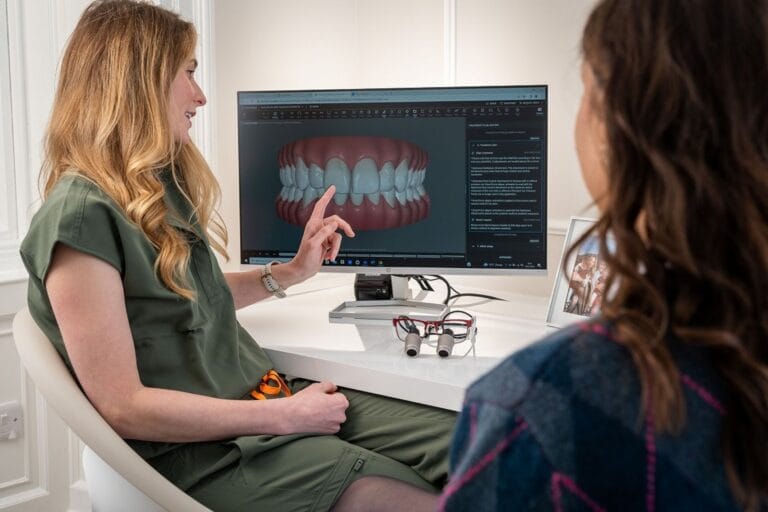
A dental website has to do more than look professional. It needs to help a prospective patient understand the treatment, trust the clinician, judge likely value, reduce anxiety and take the next step. WLW FUTURE designs dental websites around the decisions patients actually make.
Our UK dental consumer survey reviewed 382 completed responses. Quality and level of service was selected by 73.7% of respondents considering a new dentist, value for money by 68.4% and dentist knowledge and experience by 68.4%.
For dental web design, those findings create a practical requirement. The website needs to make quality, expertise, price, proof and next steps easier to understand before asking somebody to enquire.
The strongest website opportunities come from answering the questions that reduce uncertainty. The research points to six design priorities.
Explain standards, care, treatment approach and relevant outcomes. A premium looking practice alone does not tell the patient why the clinical service is right for them.
Connect the dentist or clinician directly with the treatment. Qualifications, experience and treatment focus should answer a patient question rather than sit on a generic team page.
Use responsible price guidance, explain what affects the final cost and make payment or finance information easy to find where relevant.
Reviews, case studies and before and after examples are more useful when they sit beside the treatment or concern the patient is researching.
Clear language, predictable next steps, calm forms and useful consultation information can reduce uncertainty before a nervous patient makes contact.
Treatment research, local search and enquiries often happen on a phone. Navigation, content hierarchy, forms, calls and page speed all need to work properly on smaller screens.
A high performing dental website joins the patient’s research journey together. Each stage needs a clear job.
Select the area closest to the problem. The strongest fix depends on where the patient journey is losing confidence or momentum.
Search intent, content gaps, weak hierarchy, missing price guidance, thin clinician proof and unclear calls to action
Rebuild treatment journeys around questions, alternatives, process, clinician expertise, outcomes and the next step
Treatment page engagement, enquiry conversion, booked consultations and accepted treatment value
Clinician profiles, reviews, accreditation, case evidence, before and after content and treatment specific proof
Move the strongest evidence into the pages where patients are deciding and explain why the proof matters
Interaction with proof, treatment page conversion and consultation quality
Missing prices, unexplained ranges, hidden finance information and weak value explanation
Add useful price guidance, what is included, what changes cost and relevant payment information
Price page engagement, enquiry quality, consultation rate and treatment acceptance
Navigation, font sizes, spacing, tap targets, page speed, forms, sticky elements and layout shifts
Design the phone journey first around treatment discovery, proof, calls and short enquiry routes
Mobile conversion, call activity, form completion, Core Web Vitals and abandonment
CTA visibility, form length, booking friction, phone experience, trust gaps and unclear next steps
Simplify contact routes and make the value of the consultation or next step clear before asking for data
Form completion, calls, booked consultations and source to booking conversion
Response time, ownership, CRM capture, consultation booking, unanswered questions and lapsed enquiries
Connect website enquiries to follow up, reminders, useful treatment content and reactivation
Response time, consultation conversion, treatment acceptance and revenue from web enquiries
A treatment page should answer more than what the treatment is. It should help somebody understand whether it is relevant, what alternatives exist, what the process involves, what it may cost and who will provide it.
| Patient question | Website requirement | Commercial purpose |
|---|---|---|
| Is this treatment right for me? | Symptoms, suitability, alternatives and clear limitations | Improve relevance and reduce poor quality enquiries |
| Who will treat me? | Relevant clinician experience linked directly to the treatment | Build confidence |
| What happens? | Process, stages, consultation and recovery information | Reduce uncertainty |
| What might it cost? | Price guidance, ranges, inclusions and finance where appropriate | Set realistic expectations |
| Can I trust the result? | Reviews, case stories and relevant outcomes | Provide proof |
| What do I do next? | Clear consultation, enquiry, phone or booking route | Convert intent |
The WLW research found that knowledge and experience mattered to 68.4% of respondents choosing a dentist. The same research found reviews were important in dental advertising. Those signals should shape where proof sits on the website.
Explain relevant experience, treatment focus and why it matters to the patient. Avoid making the visitor decode qualifications without context.
A review about implants, nervous patient care or cosmetic treatment is stronger beside the relevant decision than in a generic testimonial carousel.
Show the starting problem, treatment route, result and relevant context. Avoid unsupported promises or results presented without explanation.
Use relevant professional, regulatory and quality information where it genuinely helps the patient understand the practice.
Cost was one of the strongest themes in both the WLW research and current national evidence. The Adult Oral Health Survey reported that 30% of adults said cost had influenced the care they chose and 23% said cost had delayed treatment.
The commercial job is to make cost understandable enough for the patient to continue researching and enquire with realistic expectations.
Patients cannot use the content properly if the page is slow, difficult to navigate or awkward on a phone. Dental web design should treat technical performance and accessibility as part of the customer journey.
Prioritise the information and actions a patient needs on a smaller screen instead of shrinking the desktop layout.
Reduce unnecessary scripts, heavy media and layout shifts that slow the journey or make interaction difficult.
Use readable type, contrast, semantic structure, keyboard friendly interactions, useful labels and accessible forms.
Make treatments, prices, clinicians, locations and contact routes easy to find without forcing patients through unnecessary layers.
Make contact options obvious, short and usable on a phone with a clear expectation of what happens after submission.
Use analytics and behaviour data to identify where patients stall, abandon or choose another route.
A website can generate leads while the wider patient journey still loses them. Form design, response time, reception handling, consultation booking and CRM follow up all affect whether web demand becomes treatment.
Website conversion needs an operational owner
Track where the enquiry came from, what treatment the patient was considering, how quickly the practice responded, whether a consultation was booked and whether treatment was accepted.
Website architecture affects whether search engines and AI systems can understand treatments, clinicians, locations, expertise and supporting evidence. Dental web design and dental SEO should therefore be planned together.
Create clear relationships between treatments, problems, clinicians, locations, prices and supporting content.
Make practice locations, service areas and local treatment intent clear without creating thin or repetitive location pages.
Use clean heading structures, metadata, internal linking, crawlable content, structured data and sensible performance.
Build useful content around cost, treatment differences, suitability, recovery, anxiety and clinician expertise.
WLW FUTURE has worked with dental brands including Swiss Smile and Vital Europe across strategy, branding, websites, advertising, SEO, PPC, creative and customer journeys.
For Vital Europe, WLW’s published case study records a 98% increase in advertising response and a 275% increase in conversions following changes to the advertising and content approach.
Research and strategy
Brand and content
Website UX and conversion
SEO and PPC
Advertising and creative
CRM and lead journeys
WLW can review your treatment pages, mobile UX, clinician proof, prices, reviews, forms, booking routes, analytics and follow up as one patient journey.
Book a 15 minute requirements callA dental website should make treatments, clinician expertise, prices, reviews, locations and next steps easy to understand. It also needs strong mobile usability, accessible forms, search foundations and clear routes into consultation or enquiry.
Conversion improves when the website answers the questions that reduce uncertainty. Quality, clinician experience, cost, treatment process, proof, reassurance and a clear next step should appear in the journey before the patient is asked to enquire.
WLW’s consumer research found dentist knowledge and experience was selected by 68.4% of respondents considering a new dentist. Profiles should therefore connect qualifications and experience with the treatments the clinician provides.
Useful price guidance can help patients judge whether to continue. The appropriate level depends on the treatment. Complex care may need examination before a final price is possible but ranges, starting points, inclusions and finance can still reduce uncertainty where appropriate.
Reassurance should run through the full journey. Clear explanations, predictable next steps, clinician information, treatment detail and simple contact routes can all reduce uncertainty before the first appointment.
Yes. Site architecture, treatment pages, local relevance, technical structure, internal linking and content all affect whether the practice can be discovered through search. Web design and SEO should be planned together.
Measure qualified visits, calls and forms, booked consultations, treatment acceptance and revenue by treatment. Website traffic and enquiry totals alone do not show whether the digital journey is commercially effective.